Local Silencing: Calladita Te Vez Más Bonita
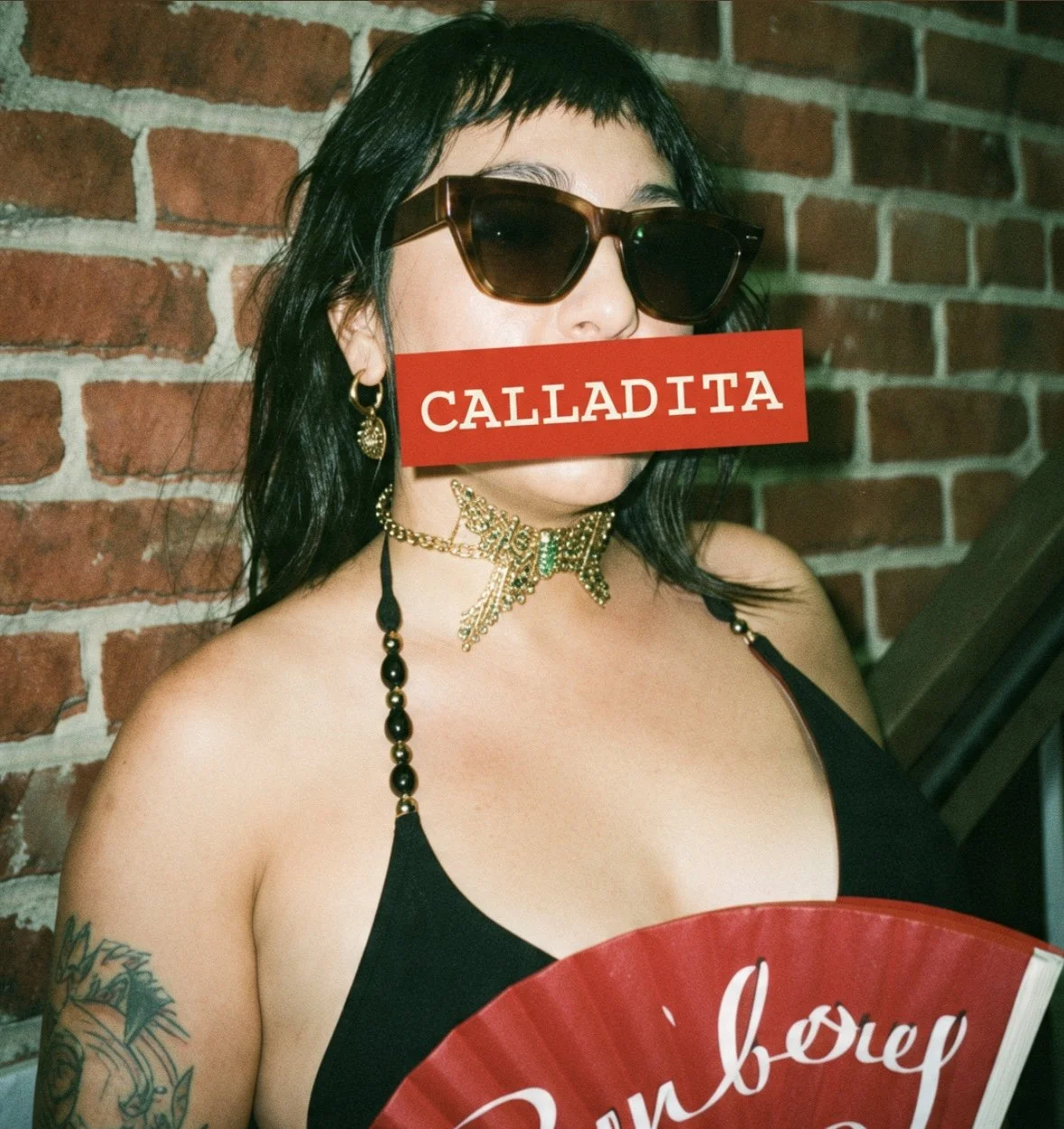
Photo: Laura Sermeño, local poet.
People in survival mode since childhood. That was my Chilean friend Mariana’s take on a panel of local Writers of Color I organized for the second annual Los Feliz Writers Fest 2026. The festival is in its infancy and revealed a need for community reflection and growth. This year’s four-day festival highlighted very talented local poets. Mostly white poets, which is why I felt the need to host an event in which only Writers of Color were featured. If you’re already censoring me in your head for getting racial, fuck off…
Some would say the lack of diversity in the festival was simply a reflection of Los Feliz’s demographics, but while 2024 Census numbers show Los Feliz as a mostly white community, POC (People of Color) make up a little over one-third of the population. The festival spilled over into East Hollywood, an area with a population that is 40% POC. Los Feliz holds its popular flea market in Echo Park, a neighborhood with only 23.7% white residents. Why didn’t the festival represent the one-third of POC in Los Feliz and the diversity of the adjacent neighborhoods it takes up space in? All the white participants play in Los Feliz, but they don’t all live there, which begs the question… why do whites trickle into Los Feliz more than POC? Are POC avoiding Los Feliz, or is Los Feliz not welcoming us? If POC are simply not seeking out the festival, why are they not being invited? Exclusion is deliberate silencing, so what is going on? The issue of a silencing scene isn’t exclusive to this community or its Writers Festival. Other prominent local literary spaces face silencing issues. In Venice at Beyond Baroque, the poet Laura Sermeño was recently silenced for writing a piece of fiction.
In an interview, Laura explained that they pushed her out for doing what she was initially praised for: her boldness. According to Laura, her boyfriend at the time, let’s call him “Ex,” had been physical with a prominent male figure in the Beyond Baroque scene. Let’s call him “Two.” Ex and Two kissed at a party. Two is married. His wife knew about the encounter and seemed fine with it. She happens to be white, and according to Laura, “The Wife” is as influential as her husband. Laura’s fictional poem was sexual and, inspired by the two guys kissing, described a threesome: Laura, Ex, and Two. She wrote the poem in response to a sexual prompt given to her by Two. The poem was posted online by another member of Beyond Baroque. Laura retells that initially, Ex read the poem and laughed it off. Only when “The Wife” read it and took issue with it did Laura face backlash from Ex and the community. As a gatekeeper, “The Wife” escalated the response against Laura to the point that Laura was compelled to push back and publicly call out her aggressors on her Instagram stories. Beyond Baroque unfollowed Laura on Instagram, and her relationship with Ex dissolved as he buckled under pressure and sided with the gatekeepers. I don’t know any of these people except Laura, and I don’t want to know them, but based on what Laura shared, it’s more of the same shit I’m sick of: men being toxic and gatekeeping-silencers. She was silenced for a sexual piece of fiction that hurt the image of a white woman. Or maybe for disrespecting the institution of marriage. Maybe both. Either way, fuck marriage and white fragility. She made those in power feel uncomfortable, so they pushed her out of their scene. Even if everyone involved were white, it would still be a problematic situation over a fictional poem. What interesting writer avoids the uncomfortable?
A few days ago, Laura was kicked out of Stories, a local bookstore in Echo Park. The store employee was upset to see Laura in the store trying to use the restroom. Laura has been vocal in calling out rape apologists and local poet Matt Sedillo for violence reported by Ethnic Studies Professor Dr. Irene M. Sanchez. Other local artists, including Myriam Gurba, have also spoken out against Sedillo. The Stories employee claimed Laura called them a rape apologist, which she had not done. Laura tried to explain that she had been vocal against others, but not the employee. Laura was kicked out of the store with her little boy. That’s our scene here locally. Should I still try to be a part of this?
I recently found out the Skylight Book Club in Los Feliz only reads white men. Am I surprised? After my experience with the whiteness of the writers’ fest, hell no! (Note: I wrote this blog post soon after the writers’ festival, and a few weeks have passed… I inserted this note yesterday, 9/6, after hearing an unconfirmed rumor that the next book club selection is a woman. The question now is… did the change occur after deep reflection and honest understanding, or was it a quick surface-level switch based on recent criticism?) My impression is that the writer’s festival is trying to establish itself in a community that doesn’t care for amplifying the voices who need it the most right now. A book club voting to read only white men could be proof of a systemic cultural bias and exclusion. I believe what Laura and other women, including myself, have experienced stems from cultural biases and silencing of creatives with perspectives and experiences outside the local status quo. Literary gatekeepers have created a hegemony that will tolerate you if you’re palatable to it. If you’re going to keep quiet about sexual violence, sexism, racism, and lack of diversity, you’re in. Be fun, easy-breezy, or sexy, and you’re in. Don’t question. Don’t think about Black and Brown. Don’t stand up for women in a loud way. Be cute.
I had just arrived at one of the Los Feliz Writers Fest 2026 events, looking and feeling cute, when I was interrogated by a white woman. She was a stranger to me. In less than five minutes of being there, she started questioning my name: “Why do you pronounce your name that way? What is the significance? Why did your parents name you that?” My anxiety took over, and her face turned into a spotlight, white-hot, burning me. Two other white women waited for my response. Why did she not know that her interrogation was inappropriate? I worried about the POC I invited to the festival. If my guests experienced this aggression against their personal boundaries, it would be my fault for exposing them to this nonsense. I left the event early, deep in thought and worry. Even considered canceling my Local POC Voices event. Throughout the festival, I faced multiple situations like this interrogation. One of them really hurt. I will not write about it, but it will stay with me forever. I’ve been living in my neighborhood for almost 15 years. I’ve lived in my current apartment for ten. This entire area has been my playground since I was old enough to ditch school and take a bus from East LA. I used to ditch to Venice too, but it’s changed so much it hurts to visit. I want access to a local writer community, here, in my neighborhood, that will treat people like me with respect, as an equal, and hold space for Voices of Color, so it’s my turn to interrogate: Are leaders within the local literary communities motivated at all by social justice? Or are they only motivated by criticism? If equal representation of diverse racial backgrounds, romanticism and realism, man, woman, and trans, loud and quiet, does not matter in the local literary communities in 2026, in what is supposed to be one of the most progressive cities in the US, why should I expect genuine character development and fundamental change? Who are you? What does your name mean?
My close friends told me not to engage with these scenes anymore. An elder Chicano mentor of mine told me to stay put, be loud and fierce. Historically, POC are kept out of living, playing, and shopping in certain areas, as well as the white literary establishment. I understand the importance of fighting the gatekeepers and silencers. Our history should play a role in the shaping of these literary communities. I’m torn. I want nothing to do with predominantly white spaces. They’re terrifying to me, but I want voices like mine to be heard in these places. I’ll eventually write myself into an answer on what I should do.
This poem is for Laura Sermeño and all the people being silenced by our local literary communities:
CALLADITA
She’s in your stories ranting, vulgar.
Making pent-up anger public.
Every detail blames their power.
She’s Sister Thunder, teacher, mother.
Female spider, judged a killer.
Tempts your man so she’s the sinner.
But did you notice hidden pain
In dreams kept silent, tone defiant?
Makes it easy, swipe her face.
She’s a monster, a head case.
Is it easy cuz she’s hard?
Her Brown skin, as thin as yours.
Maybe if she’d stop, you’d like ’er.
Maybe if they lobotomized ‘er.
Maybe if she didn’t interfere with your cheer.
Maybe you just hate the mirror.
